Chlorine & Shock
How much of which product to raise free chlorine by a given amount.
Every chemical dose a pool will ever need is volume × a constant. Which means the single most valuable number in pool care is the volume — and most people are using the figure from a brochure rather than one they measured.
Get the gallons wrong by a fifth and every dose for the life of the pool is wrong by a fifth, in the same direction, forever.
Volume
Rectangular pools are length × width × average depth × 7.48. Round pools use π r². Oval pools use π ÷ 4 × length × width. Average depth on a sloped floor is (shallow + deep) ÷ 2 — exact for a straight slope, an approximation for anything with a bench or a step-down.
7.48 gallons per cubic foot is a conversion constant, not an estimate.
Chlorine products are not interchangeable
To raise free chlorine 1 ppm in 10,000 gallons takes about 2 oz of cal-hypo, 2.3 oz of dichlor, 1.5 oz of trichlor, 10.7 fl oz of liquid chlorine, or 16 fl oz of household bleach.
That is the easy half. The hard half is what each one also adds:
- Cal-hypo adds calcium hardness. In hard water it is what scales the tile line and the heater.
- Dichlor and trichlor add cyanuric acid, and trichlor is strongly acidic besides.
- Liquid chlorine adds only salt, and nudges pH up.
Cyanuric acid is the trap
CYA protects chlorine from sunlight, which is why stabilized products exist and why an outdoor pool needs some. But above roughly 50 ppm it binds chlorine so tightly that the chlorine stops killing anything — and CYA does not break down. It leaves only by dilution.
A season of trichlor tablets is the standard route to a pool that reads plenty of chlorine and still goes green. Draining and refilling is the cure, and it is the expensive one.
How to dose
Pump running. Slowly, at the deep end or through the skimmer. Granules resting on a vinyl liner bleach it permanently.
Test after four hours of circulation, not immediately — a reading taken beside the return jet is a reading of the return jet.
6 articles
How much cal-hypo for a 18 × 36 ft oval pool to raise chlorine 2 ppm
| Dose0.22 kg | 7.6oz |
|---|---|
| Pool volume36 × 18 ft oval, 4–6 ft deep (avg 5 ft) | 19,036gallons |
| Volume in ft³× 7.48052 gal per ft³ | 2,545ft³ |
| Target risefree chlorine | 2 ppm |
| What else it adds | adds about 0.8 ppm calcium hardness per ppm of chlorine |
| — Same job, other products — | |
| Dichlor (56%)adds about 0.9 ppm cyanuric acid per ppm of chlorine | 8.8oz |
| Trichlor (90%)adds about 0.6 ppm cyanuric acid per ppm, and is strongly acidic | 5.7oz |
| Liquid chlorine (12.5%)adds nothing but salt — raises pH slightly | 40.7fl oz |
| Household bleach (8.25%)same chemistry as liquid chlorine, weaker | 60.9fl oz |
Notes
- Volume first, and everything else follows. A 36 × 18 ft oval pool at 5 ft average depth holds 19,036 gallons. Every dose on this page and every dose you will ever add is that number × a constant — get it wrong by a fifth and every chemical for the life of the pool is wrong by a fifth. Measure the pool; do not trust the brochure.
- Average depth here is (4 + 6) ÷ 2 = 5 ft. That is exact for a pool with a straight slope. Pools with a bench, a spa step or a flat shallow section that drops off need the sections worked out separately and added.
- Cal-hypo (65%) adds more than chlorine. It adds about 0.8 ppm calcium hardness per ppm of chlorine. In hard-water areas this is what scales the tile line and the heater. Rotating products, rather than using one all season, is how you avoid ending up with water that needs draining to fix.
- Because this product adds no stabilizer, chlorine in an outdoor pool will burn off fast in sun unless CYA is already in the 30–50 ppm range. Test it before assuming the dose is not working.
- Add it with the pump running, and add it slowly at the deep end or through the skimmer. Undissolved granules sitting on a vinyl liner bleach it permanently.
- Test after four hours of circulation, not immediately. A reading taken straight after dosing tells you about the water beside the return, not about the pool.
Chlorine dose by pool volume
300 calculations · browse all
- How much liquid chlorine for a 12 ft round pool to raise chlorine 1 ppm
- How much dichlor for a 12 ft round pool to raise chlorine 2 ppm
- How much liquid chlorine for a 15 ft round pool to raise chlorine 1 ppm
- How much dichlor for a 15 ft round pool to raise chlorine 2 ppm
- How much cal-hypo for a 18 ft round pool to raise chlorine 1 ppm
- How much trichlor for a 18 ft round pool to raise chlorine 2 ppm
- How much cal-hypo for a 21 ft round pool to raise chlorine 1 ppm
- How much trichlor for a 21 ft round pool to raise chlorine 2 ppm
- How much dichlor for a 24 ft round pool to raise chlorine 1 ppm
- How much liquid chlorine for a 24 ft round pool to raise chlorine 5 ppm
- How much dichlor for a 27 ft round pool to raise chlorine 1 ppm
- How much liquid chlorine for a 27 ft round pool to raise chlorine 5 ppm
- How much trichlor for a 30 ft round pool to raise chlorine 1 ppm
- How much cal-hypo for a 30 ft round pool to raise chlorine 5 ppm
- How much trichlor for a 33 ft round pool to raise chlorine 1 ppm
- How much cal-hypo for a 33 ft round pool to raise chlorine 5 ppm
- How much liquid chlorine for a 12 × 24 ft oval pool to raise chlorine 2 ppm
- How much dichlor for a 12 × 24 ft oval pool to raise chlorine 5 ppm
- How much liquid chlorine for a 15 × 30 ft oval pool to raise chlorine 2 ppm
- How much dichlor for a 15 × 30 ft oval pool to raise chlorine 5 ppm
- How much cal-hypo for a 16 × 32 ft oval pool to raise chlorine 2 ppm
- How much trichlor for a 16 × 32 ft oval pool to raise chlorine 5 ppm
- How much cal-hypo for a 18 × 33 ft oval pool to raise chlorine 2 ppm
- How much trichlor for a 18 × 33 ft oval pool to raise chlorine 5 ppm
- How much dichlor for a 18 × 36 ft oval pool to raise chlorine 2 ppm
- How much liquid chlorine for a 20 × 40 ft oval pool to raise chlorine 1 ppm
- How much dichlor for a 20 × 40 ft oval pool to raise chlorine 2 ppm
- How much liquid chlorine for a 10 × 20 ft rectangular pool to raise chlorine 1 ppm
- How much trichlor for a 10 × 20 ft rectangular pool to raise chlorine 2 ppm
- How much cal-hypo for a 12 × 24 ft rectangular pool to raise chlorine 1 ppm
- How much trichlor for a 12 × 24 ft rectangular pool to raise chlorine 2 ppm
- How much cal-hypo for a 14 × 28 ft rectangular pool to raise chlorine 1 ppm
- How much liquid chlorine for a 14 × 28 ft rectangular pool to raise chlorine 5 ppm
- How much dichlor for a 15 × 30 ft rectangular pool to raise chlorine 1 ppm
- How much liquid chlorine for a 15 × 30 ft rectangular pool to raise chlorine 5 ppm
- How much dichlor for a 16 × 32 ft rectangular pool to raise chlorine 1 ppm
- How much cal-hypo for a 16 × 32 ft rectangular pool to raise chlorine 5 ppm
- How much trichlor for a 16 × 36 ft rectangular pool to raise chlorine 1 ppm
- How much cal-hypo for a 16 × 36 ft rectangular pool to raise chlorine 5 ppm
- How much trichlor for a 18 × 36 ft rectangular pool to raise chlorine 1 ppm
- How much dichlor for a 18 × 36 ft rectangular pool to raise chlorine 5 ppm
- How much liquid chlorine for a 20 × 40 ft rectangular pool to raise chlorine 2 ppm
- How much dichlor for a 20 × 40 ft rectangular pool to raise chlorine 5 ppm
- How much liquid chlorine for a 20 × 44 ft rectangular pool to raise chlorine 2 ppm
- How much trichlor for a 20 × 44 ft rectangular pool to raise chlorine 5 ppm
- How much cal-hypo for a 25 × 45 ft rectangular pool to raise chlorine 2 ppm
- How much trichlor for a 25 × 45 ft rectangular pool to raise chlorine 5 ppm
- How much cal-hypo for a 30 × 50 ft rectangular pool to raise chlorine 2 ppm
 Free, Total and Combined Chlorine — the Reading That Explains the Smell
A pool that smells strongly of chlorine does not have too much chlorine. It has too little, and the smell is the evidence.
 How Much Shock for a Green Pool — the Target Is a Number, Not a Bag
Most failed green-pool treatments failed because the shock level was right for an hour and wrong for the next twenty-three.
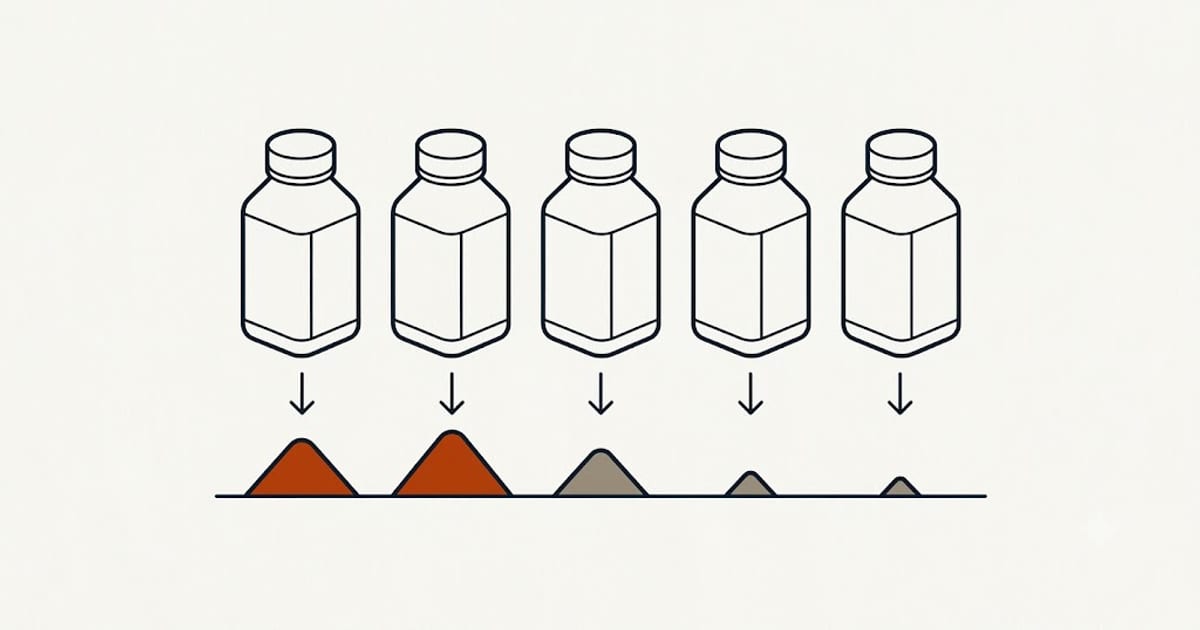 Cal-Hypo, Dichlor, Trichlor or Liquid: What Each One Adds Besides Chlorine
All five deliver chlorine. The difference is the passenger each one brings, and the passenger is what decides which pools they ruin.
 How Long After Shocking Can You Swim? Test, Do Not Wait
The common answer is 24 hours. The correct answer is a number on a test kit, and depending on the product it can be twenty minutes or three days.
 Chlorine Reads High and the Pool Is Still Green: The Four Causes
Four things produce this, and three of them are diagnosed in ten minutes with tests you already own. The fourth is not algae at all.
 How Much Chlorine to Add: Dose per 10,000 Gallons, and What Each Product Also Adds
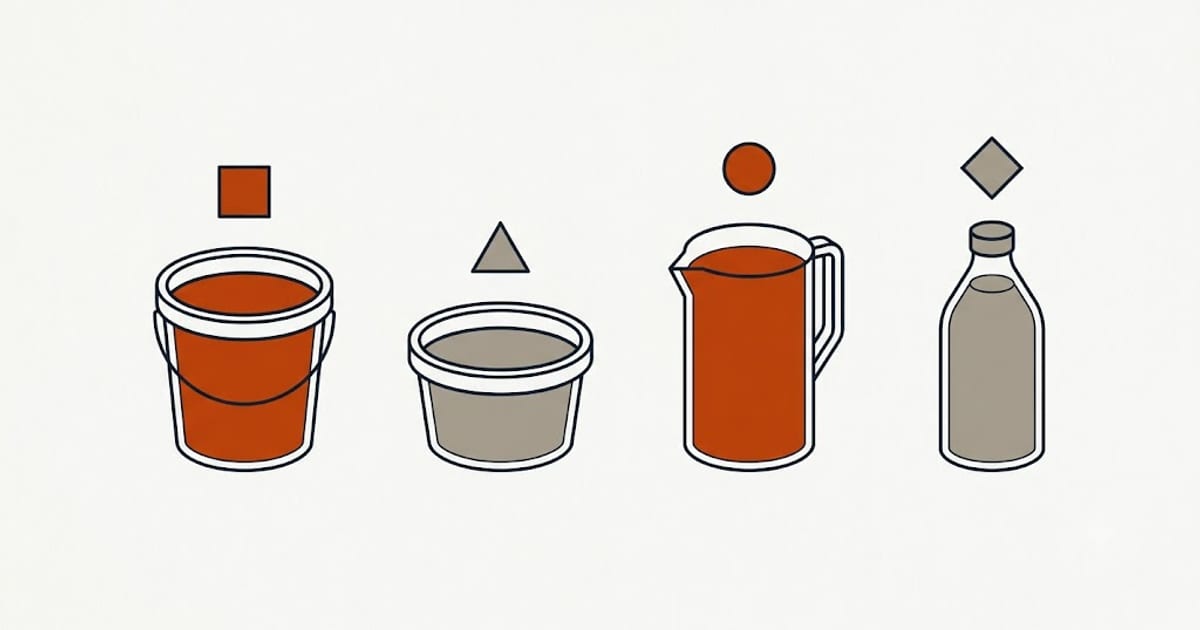
The dose is the easy half. What the product also adds to the water is the half that decides whether the pool still works in September.