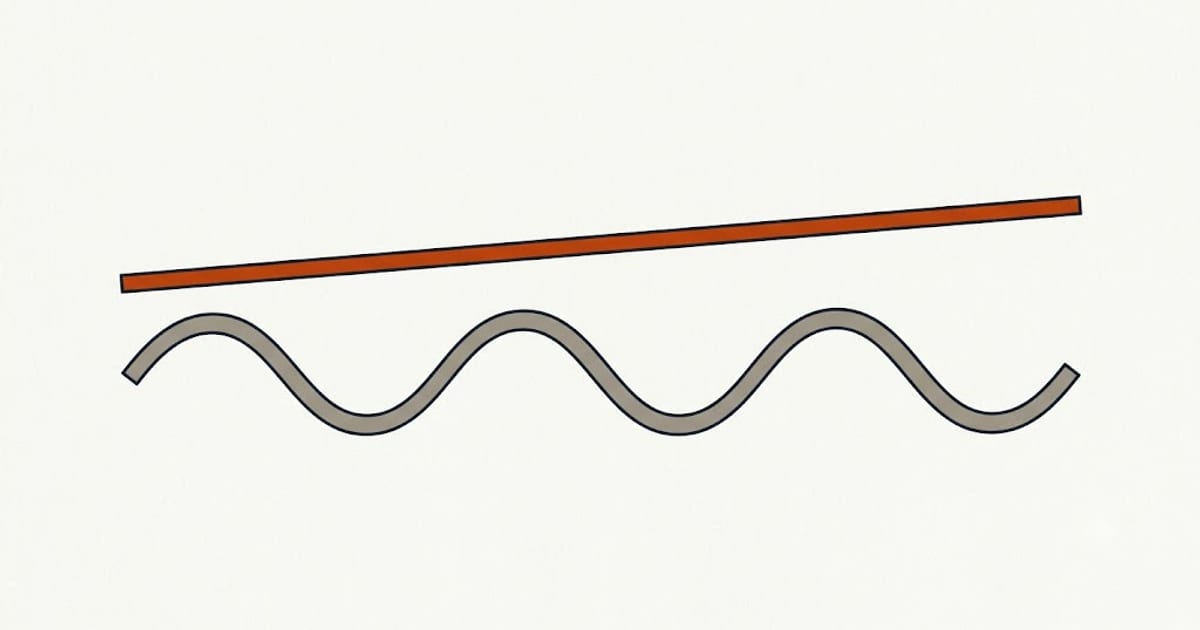
Total alkalinity is the water's resistance to a change in pH. It is not a measure of how alkaline the water is — that is pH — it is a measure of how hard the water fights back when something tries to move pH.
Get it right and pH stays where you put it. Get it wrong and every adjustment is temporary.
The target range
80 to 120 ppm for a plaster or concrete pool. 100 to 150 ppm is often preferred for vinyl and fiberglass, where there is no plaster surface needing protection and a little extra buffer helps.
What each direction feels like
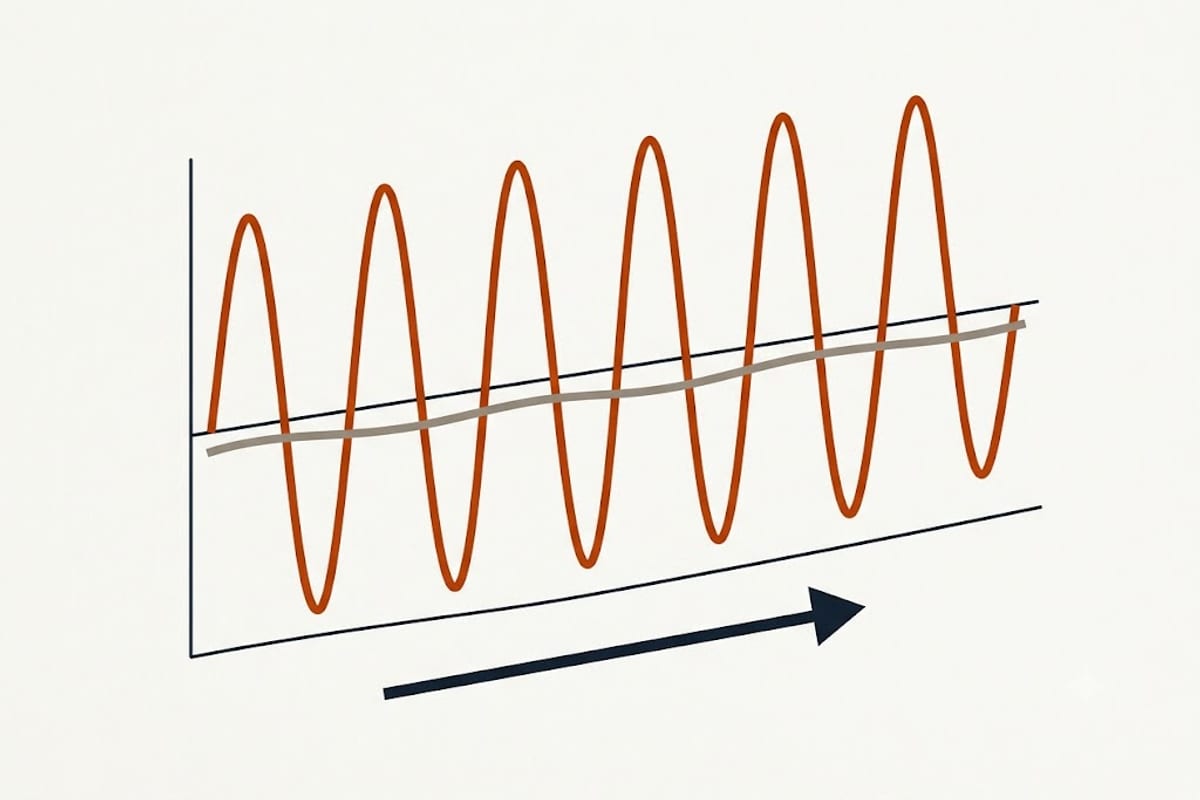
Low alkalinity produces pH bounce. A small addition of acid drops pH a long way; a small addition of anything else sends it back. The water is corrosive to metal and, in a plaster pool, will etch the surface. Chlorine efficiency swings with the pH, so sanitation becomes unpredictable too.
High alkalinity produces pH drift upward. You lower pH, and within days it has climbed back. The buffer is so strong that acid additions are absorbed by the alkalinity before they move pH much. Scaling and cloudy water follow, especially where calcium hardness is also high.
Almost every "my pH will not stay down" problem is high alkalinity, and treating it by adding more acid to the pH is treating the symptom.
Raising it
Sodium bicarbonate — baking soda. Roughly 1.5 lb per 10,000 gallons raises alkalinity about 10 ppm, and it moves pH very little, which is why it is the right product.
Broadcast it over the surface with the pump running and give it several hours before retesting.
Soda ash (sodium carbonate) raises alkalinity too, but it moves pH hard at the same time. Use it when both are low; use bicarbonate when only alkalinity is.
Lowering it — the counter-intuitive part
Acid lowers pH and alkalinity together, which means you cannot lower alkalinity without pushing pH down as well. The standard method works around that:
- Add muriatic acid to bring pH down to about 7.0 to 7.2 — lower than the target, deliberately
- Aerate the water: run a fountain, aim returns upward, run a spa spillover, or run the pump hard
- Aeration drives off carbon dioxide, which raises pH back toward 7.4 to 7.6 without raising alkalinity
- Repeat until alkalinity is in range
Each cycle takes a day or two. Dropping alkalinity by 40 or 50 ppm often takes several rounds, and there is no faster route — anything that lowers alkalinity lowers pH with it, and aeration is the only thing that separates them again.
The order to work in
Alkalinity first, then pH, then calcium hardness, then chlorine. Adjusting pH while alkalinity is out of range is work that undoes itself.
There is one exception: if the pool is green, chlorinate first and balance afterwards. Algae is a faster problem than water chemistry.
Testing
Alkalinity moves slowly. Weekly is enough for a stable pool, and after any large addition of acid, after heavy rain, and after adding a lot of fresh water — fill water carries its own alkalinity, and in some regions it is very high.
A drop-count titration test is far more accurate than test strips for this particular number, and alkalinity is the one where strip error matters most, because everything else is adjusted against it.
Where alkalinity goes
Alkalinity falls on its own over a season, and there are three reasons.
Acid additions. Every dose of muriatic acid used to bring pH down takes alkalinity with it. Over a summer of weekly pH corrections that adds up, which is why a pool that started at 110 ppm in May reads 70 in August with nothing else having changed.
Trichlor tablets. They are acidic, and a pool sanitised on tablets is receiving a slow continuous acid dose. Pools on tablets need bicarbonate added routinely rather than occasionally.
Rain, which is slightly acidic and which also dilutes. A heavy storm can move alkalinity noticeably in a small pool.
When the reading does not behave
Two situations produce alkalinity numbers that make no sense.
Very high cyanuric acid inflates the alkalinity reading, because CYA itself contributes to the titration. At 80 ppm CYA the reading is overstated by roughly a third of the CYA figure, so a pool testing 110 may actually be sitting near 85 of true carbonate alkalinity. Pools run at high stabiliser levels should subtract before deciding an adjustment is needed.
Borates, where they have been added deliberately as a secondary buffer, also register. A pool with borates behaves more stably than its alkalinity number suggests, which is the point of adding them.